Last updated October 10, 2026
On this page
What an ice dam does
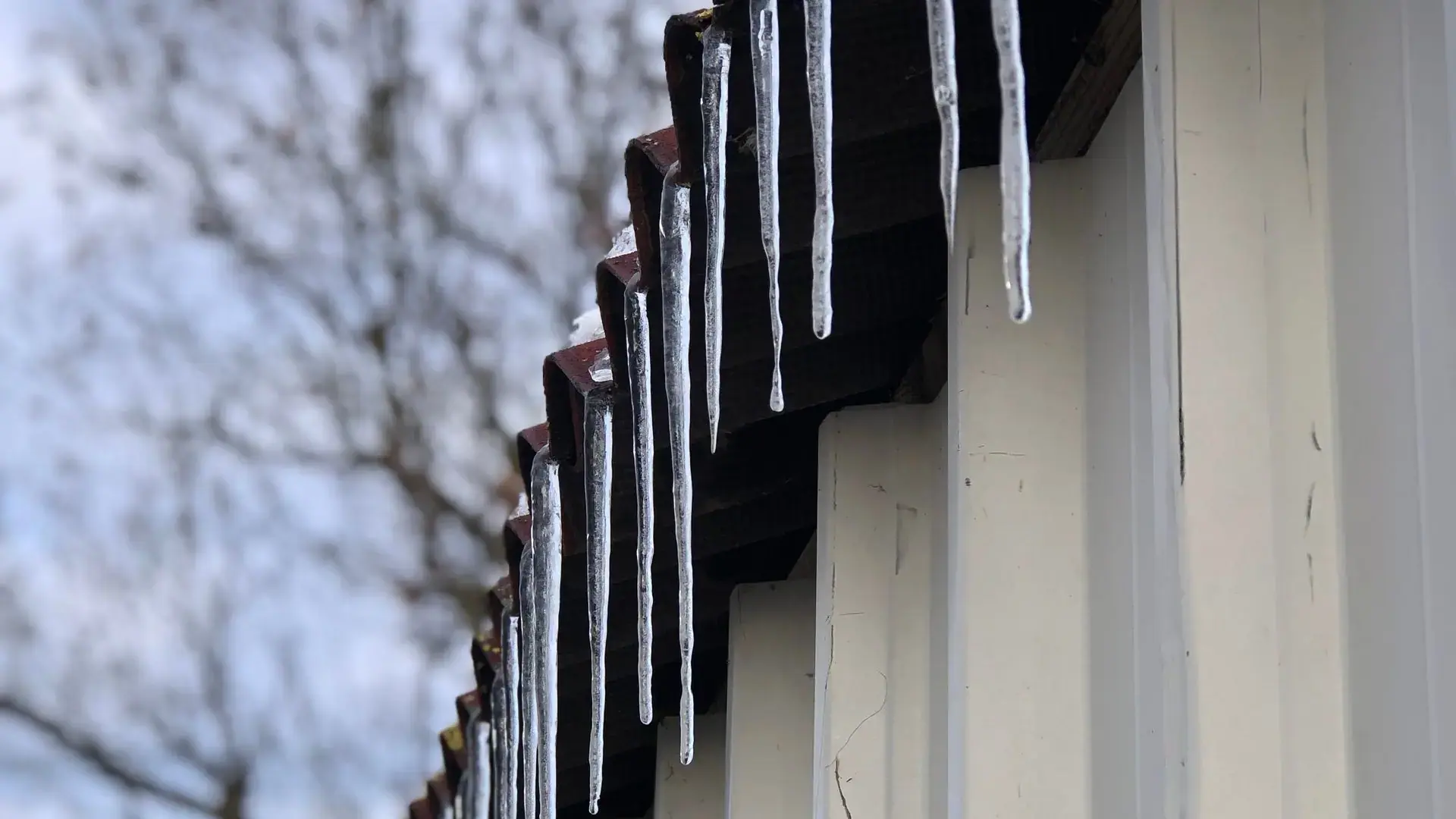
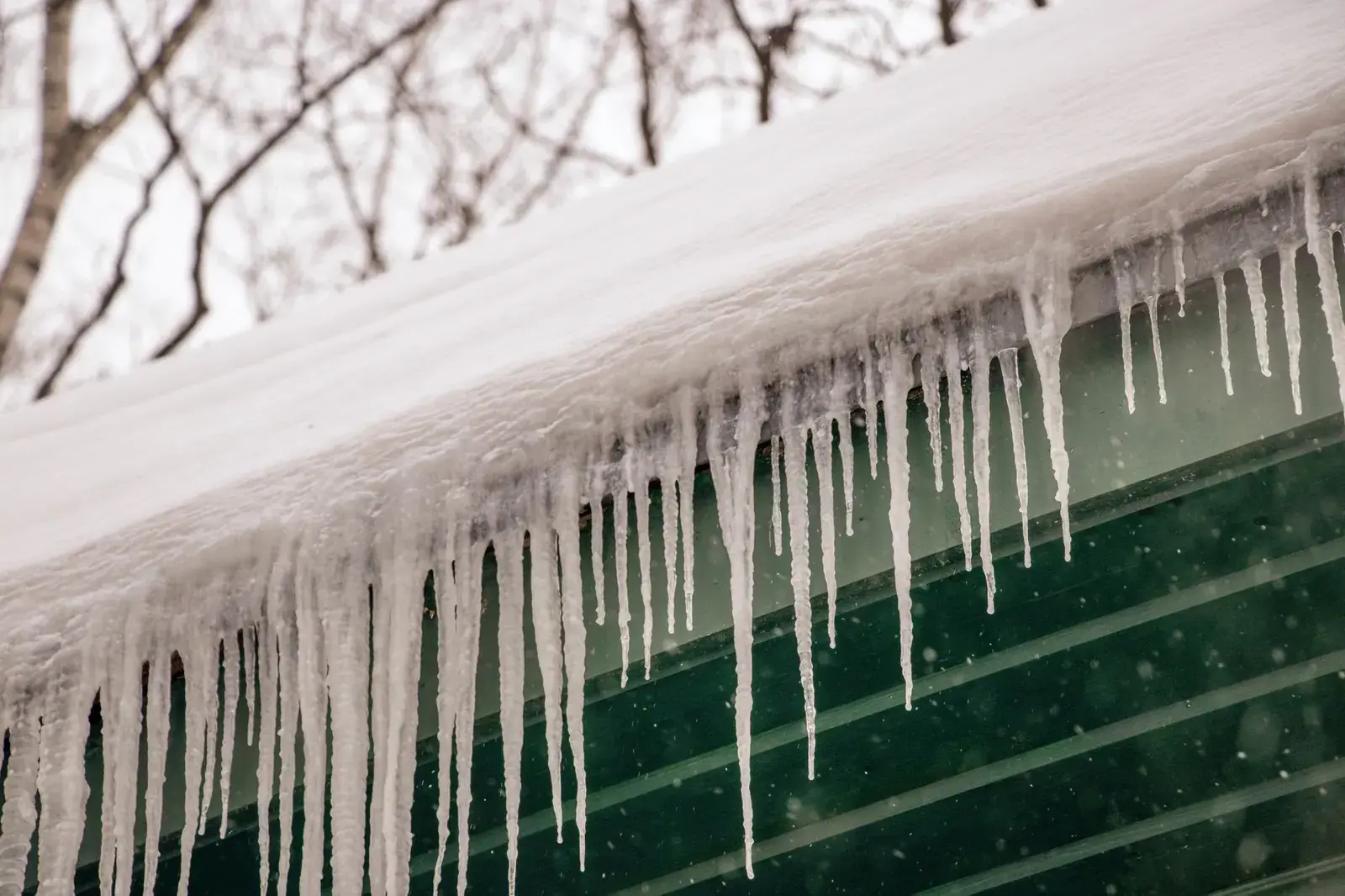
Heat from the house melts snow on the roof. The water runs down to the cold eaves and freezes into a ridge of ice. More meltwater backs up behind it and can get under the shingles. From there it reaches the attic, then the ceiling, then sometimes the inside of an exterior wall. This is different from frost in the attic, which is covered in attic mold removal. For the overview, see the main Dunstable page.
Where the water ends up
- Attic insulation. It soaks up water and can stay wet for a long time.
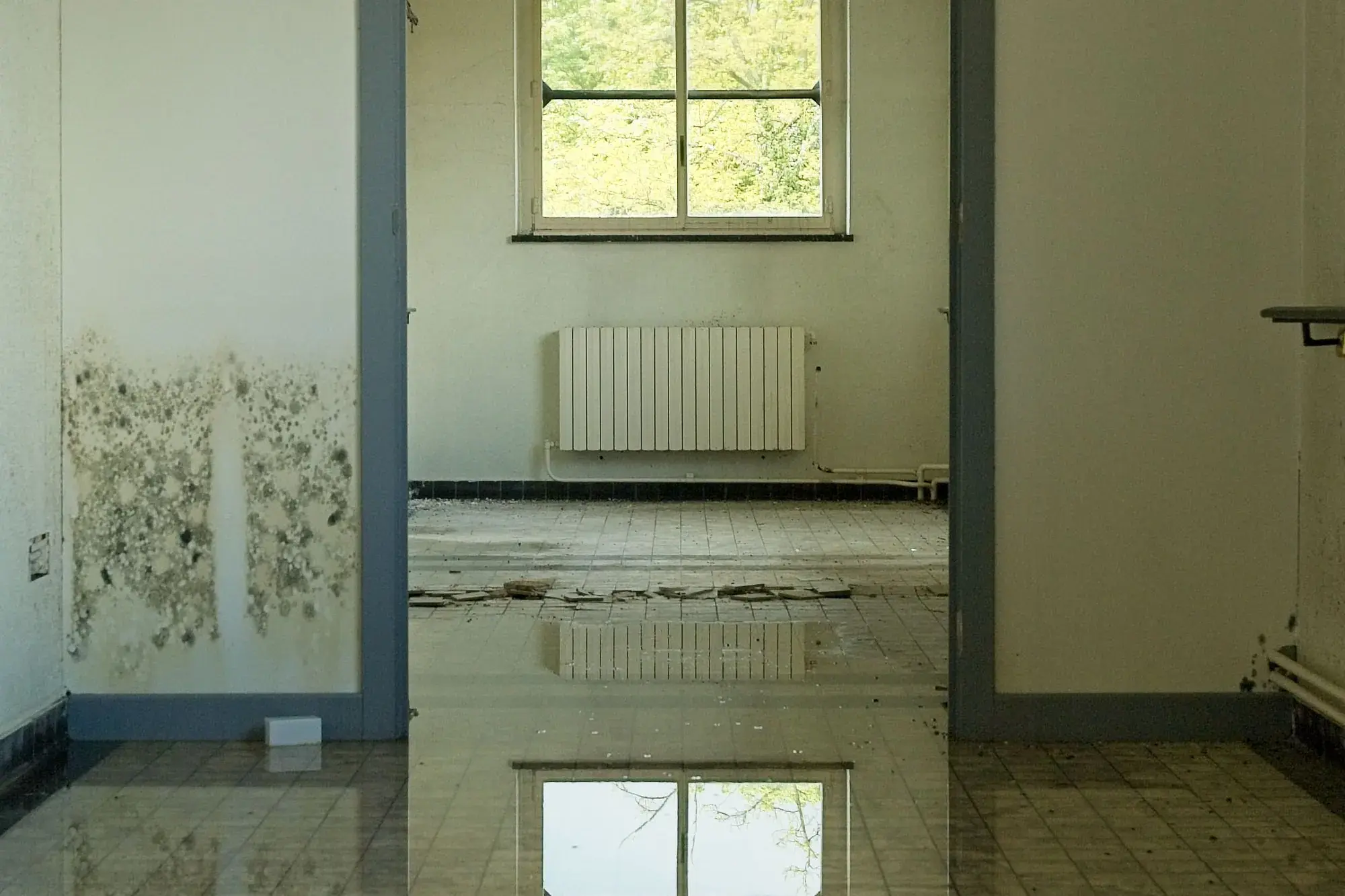
- Ceilings. Brown stains and bubbling paint, often along an exterior wall.
- Wall cavities. Water runs down inside the wall where you cannot see it.
- Window and door trim under the eaves.
Signs of mold after an ice dam
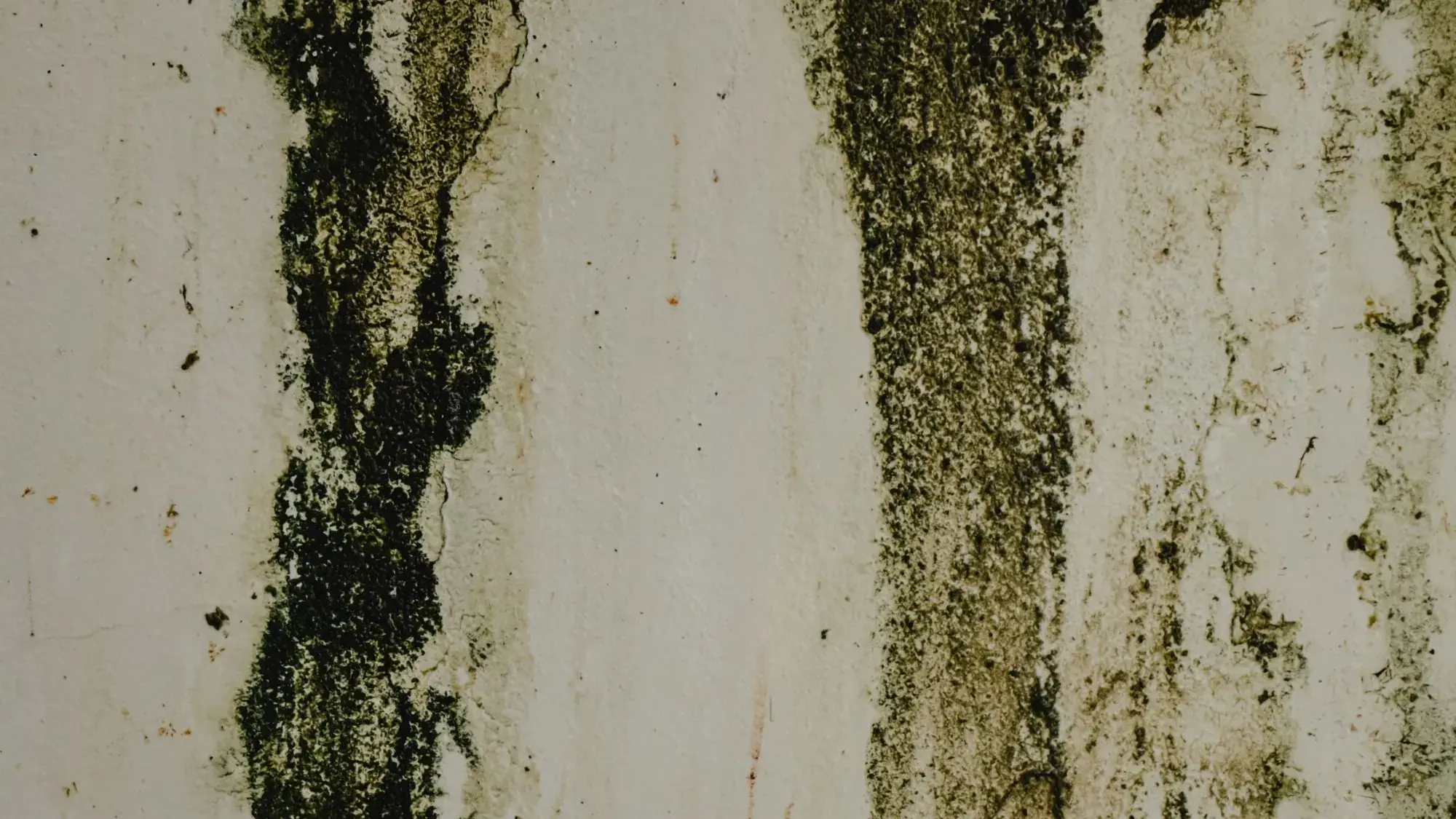
- Brown or yellow ceiling stains that grow after each thaw.
- Peeling or bubbling paint near the roofline.
- A musty smell in the top-floor rooms.
- Damp, matted insulation or dark roof boards at the hatch.
- Stains inside closets on exterior walls.
What to do right away
- Take photos of the stains and the ice, with dates.
- Call your insurance agent if water came inside. See does insurance cover mold.
- Dry the area within 24 to 48 hours (EPA). Move belongings away and run a dehumidifier.
- Do not disturb visible mold. Brushing and fans spread spores.
- Call a professional if it is bigger than about 10 square feet or inside a wall.
Stay off the roof
Do not climb an icy roof or chip at the ice. It is dangerous and can damage the shingles. Leave ice removal to a roofer.
Stains on the ceiling after a thaw?
Call and describe where, and how long ago.
How removal works
- Find what is wet. Moisture meters and sometimes thermal imaging.
- Contain the area. Plastic sheeting and HEPA air filtration.
- Remove wet insulation and drywall that cannot be dried.
- Clean the framing and roof boards. HEPA vacuum, then brush or sand.
- Dry everything before anything is closed up.
- Fix the cause so it does not repeat.
Stopping the next ice dam
Roof vents alone do not fix it. PNNL and ENERGY STAR both say to seal the air leaks from the house into the attic first, then add insulation, then check ventilation. Typical leaks are the hatch, recessed lights, wiring holes and plumbing stacks. Removing mold without this step means the next thaw brings it back.
What it costs
Angi's Boston-area figure for attic mold is about $3,000 to $6,000. Mold in a ceiling or wall is priced differently. See the mold removal cost guide.
Nearby towns
Ice dams are common across the area. See Westford, Chelmsford and Groton. If the water came from somewhere else, read mold removal after water damage.
Frequently asked questions
Can an ice dam cause mold?
Yes. Meltwater that gets into the attic, ceiling or wall can leave wood and insulation wet. If it is not dried within 24 to 48 hours, mold can grow (EPA).
Is ice dam damage covered by insurance?
Sometimes. It depends on the policy and the cause, so call your agent before anything is torn out. See our insurance guide.
How is this different from attic frost?
Frost comes from warm, damp air inside the house freezing on cold roof boards. An ice dam pushes water in from outside.
Should I remove the ice myself?
No. Climbing an icy roof is dangerous, and chipping can damage the shingles.
Will adding roof vents stop ice dams?
Usually not by themselves. Sealing air leaks and adding insulation comes first (PNNL, ENERGY STAR).